- Home
- PV
- CV
- KD
- About Us
- VR
- Global Experience Store
- Dealer
- News
- Contact Us
- Video
 T5EVO
T5EVO T5L
T5L T5
T5 Friday
 T5 HEV
 V9
V9 UTOUR (M4)
 M5 EV
M5 EV M5
M5 Lingzhi Plus
 S7
S7 V9 HEV
 S7
S7 6X4 H7 Tractor
 6X4 H5 Tractor
 6X4 HK Tractor
 4X2 H7 Tractor
 4X2 H5Tractor
 4X2 H5 Cargo Truck
 4X2 M3 Cargo Truck
 4X2 L2 Cargo Truck
 6X4 H7 Dump Truck
 6X4 H5 Dump Truck
 4X2 H5 Dump Truck
 4X2 M3 Dump Truck
 Light Truck L2
 Light Truck L2 EV
 H7 Refrigeratior Truck
 H5 Mixer Truck
 M3 Tank Truck
 M3 Sanitation Truck
 6X4 H7 Electric Truck
 4X2 H5V Electric Truck
 4X2 L2 Electric Truck
inquiry
Leave Your Message
Global sourcing a Dump Truck is not simply a price comparison. It is a decision about payload, terrain, regulations, service capacity, and long-term operating risk. A truck that looks economical at the factory may become expensive after ocean freight, import duties, spare parts, and technician training. That gap is often underestimated.
Industry data supports careful evaluation. Fortune Business Insights reports that the global dump truck market was valued at approximately USD 54 billion in 2023, with continued growth expected through 2032. The World Bank’s Logistics Performance Index 2023 also highlights shipment reliability, tracking, and customs efficiency as key supply-chain factors. These findings matter when comparing suppliers from different manufacturing regions. Delivery speed alone is not enough. Check production lead times, port routes, documentation quality, and after-sales response.
Real-world selection begins with the worksite. A 30-ton rigid truck may suit an open quarry, while an articulated Dump Truck can perform better on muddy, uneven haul roads. Measure the average load, haul distance, road gradient, turning radius, and daily cycles. Examine the engine rating, transmission, axle ratio, hydraulic system, tire availability, and body steel thickness. Confirm emissions compliance for the destination market. Ask for test records, warranty terms, parts lists, and references from similar operations. The International Energy Agency’s heavy-transport analyses also show growing attention to fuel efficiency and alternative powertrains, although infrastructure remains uneven. A perfect choice rarely exists. I would still compare total cost per operating hour, not the catalog price. That calculation may expose an uncomfortable truth: the cheapest truck is sometimes the costliest one to keep moving.
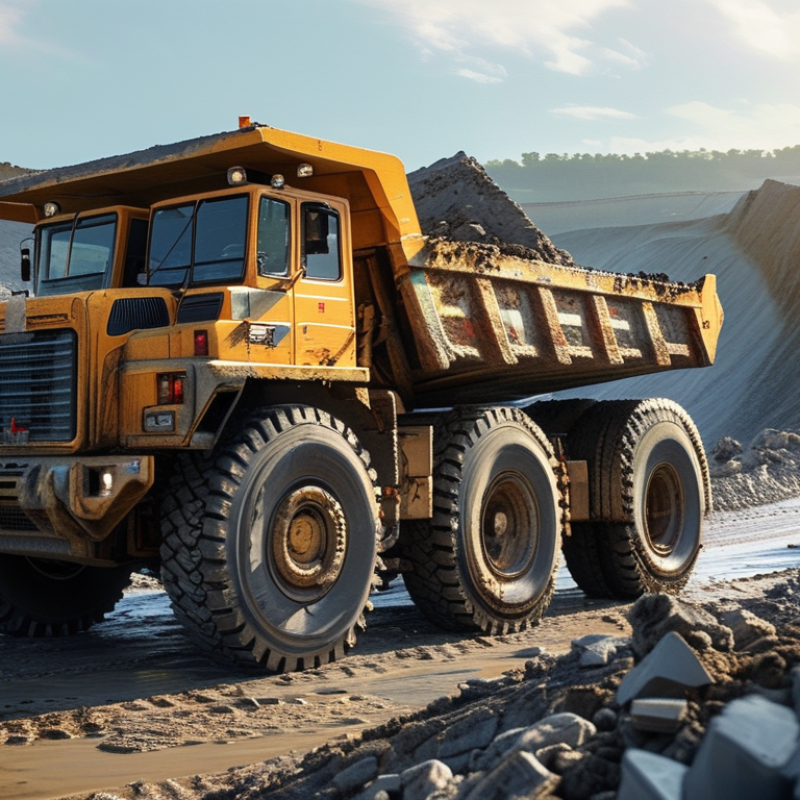
How to Choose the Right Dump Truck for Global Sourcing?
Define Your Dump Truck Sourcing Requirements
A successful dump truck purchase starts with a clear working profile. Identify the expected payload, daily distance, terrain, and loading conditions. A 20-ton truck may suit a quarry, but it can be inefficient on narrow urban roads. Record the material type, including gravel, soil, coal, or construction waste. Moisture changes weight and unloading behavior. Do not guess.
Consider climate and operating altitude before comparing quotations. Hot regions may require stronger cooling performance. Cold areas can affect batteries, hydraulic oil, and starting reliability. Check road regulations, axle limits, emissions requirements, and import documentation in the destination market. These details often change the practical value of a low purchase price. Total cost matters more than the invoice.
Tips: Create a requirement sheet with measurable figures. Ask suppliers for payload data, fuel estimates, service intervals, and parts availability. Request inspection photos and a video of the tipping cycle. Confirm warranty terms in writing. A local technician should review the truck before shipment. It may seem excessive, but one missed detail can delay operations for weeks. A checklist is useful, yet it is never perfect. Recheck your assumptions after speaking with drivers and maintenance staff. Their daily observations may reveal problems that technical brochures overlook.
| Sourcing Requirement | Recommended Data to Define | Typical Benchmark Range | Why It Matters | Priority |
|---|---|---|---|---|
| Payload Capacity | Target payload per trip, legal axle limits, and average load density | 6–10 t for light-duty; 15–25 t for medium-duty; 25–40 t for heavy-duty road trucks | The truck must carry the required material without exceeding the permitted gross vehicle or axle weight. | High |
| Typical Haul Distance | One-way distance, daily operating hours, road surface, and average trip cycle | Short haul: under 20 km; regional haul: 20–100 km; long haul: over 100 km | Distance affects fuel consumption, durability, service intervals, driver comfort, and the required transmission configuration. | High |
| Application and Material | Material type, bulk density, abrasiveness, moisture content, and loading method | Aggregates: approximately 1.4–1.8 t/m³; sand: approximately 1.5–1.8 t/m³; soil: approximately 1.2–1.7 t/m³ | Material density determines body volume, while abrasive or wet materials influence body steel, liner selection, and discharge design. | High |
| Body Volume and Design | Required cubic capacity, body shape, tailgate type, floor thickness, and wear protection | Approximately 5–12 m³ for light-duty; 12–25 m³ for medium-duty; 20–35 m³ for heavy-duty road applications | A body that is too small reduces productivity; a body that is too large may cause payload or stability problems. | High |
| Drive Configuration | Number of driven axles, terrain, traction requirements, turning constraints, and road access | 4×2 for paved roads; 6×4 for mixed-road and construction work; 8×4 for higher payload on suitable roads; 6×6 for demanding off-road conditions | More driven axles improve traction and load distribution but generally increase purchase price, weight, tire cost, and fuel use. | High |
| Engine and Gradeability | Rated power, torque, transmission type, maximum grade, and operating altitude | About 120–220 kW for medium-duty; about 220–350 kW for heavy-duty road applications; common design target of 20% or higher gradeability | Power and torque must match the gross combination weight, road gradient, altitude, and desired travel speed. | High |
| Regulatory Compliance | Destination-country requirements for emissions, safety, dimensions, lighting, braking, and road registration | Verify the applicable local emissions stage, maximum vehicle width and length, axle loads, gross vehicle weight, and mandatory safety equipment | A truck that does not meet local approval requirements may be delayed at import, restricted from registration, or unable to operate legally. | High |
| Climate and Environment | Ambient temperature, altitude, humidity, dust, corrosion exposure, and seasonal conditions | Specify operating limits such as −20°C to +45°C where applicable, plus dust, water, and corrosion protection requirements | Cooling systems, batteries, seals, air filtration, hydraulic components, and corrosion protection must suit the actual operating environment. | Medium |
| Hydraulic System | Hoist type, lifting capacity, cylinder arrangement, cycle time, oil filtration, and service accessibility | Select a hydraulic system rated for the loaded body weight, with a safe lifting margin and a controlled lowering function | The hydraulic system directly affects unloading speed, reliability, stability, and maintenance requirements. | High |
| Fuel or Energy Source | Available fuel or charging infrastructure, operating hours, energy cost, and local regulations | Diesel is common for long-distance and heavy-duty work; battery-electric options are more suitable where duty cycles and charging access are compatible | Energy availability and duty-cycle compatibility are more important than purchase price alone when comparing powertrain options. | Medium |
| Service and Spare Parts | Maintenance skill level, spare-parts availability, diagnostic support, warranty coverage, and response time | Confirm scheduled service intervals, critical spare-part lead times, technician training, and warranty terms before purchase | Strong after-sales support reduces downtime and can have a greater effect on operating cost than a small difference in purchase price. | High |
| Shipping and Import Planning | Dimensions, shipping weight, container or roll-on/roll-off suitability, port access, duties, and inland transport | Record exact packed dimensions and weights; compare completely built, knocked-down, and partially disassembled shipment options | Freight method, import taxes, port handling, and inland delivery can materially change the landed cost. | Medium |
| Total Cost of Ownership | Purchase price, freight, taxes, fuel or energy, tires, maintenance, downtime, resale value, and expected service life | Build a 5-year cost model using annual operating hours, payload, fuel consumption, maintenance cost, and estimated residual value | The lowest initial price is not necessarily the lowest-cost solution over the truck’s operating life. | High |