How to Choose the Best Chinese Hybrid Cars for Global Buyers?
In recent years, the market for Chinese hybrid cars has experienced significant growth. Analysts project that by 2025, the global hybrid vehicle market will surpass $500 billion. This surge is driven by increasing environmental concerns and the demand for fuel-efficient vehicles. Chinese manufacturers are at the forefront of this transition, producing innovative models that meet diverse consumer needs.
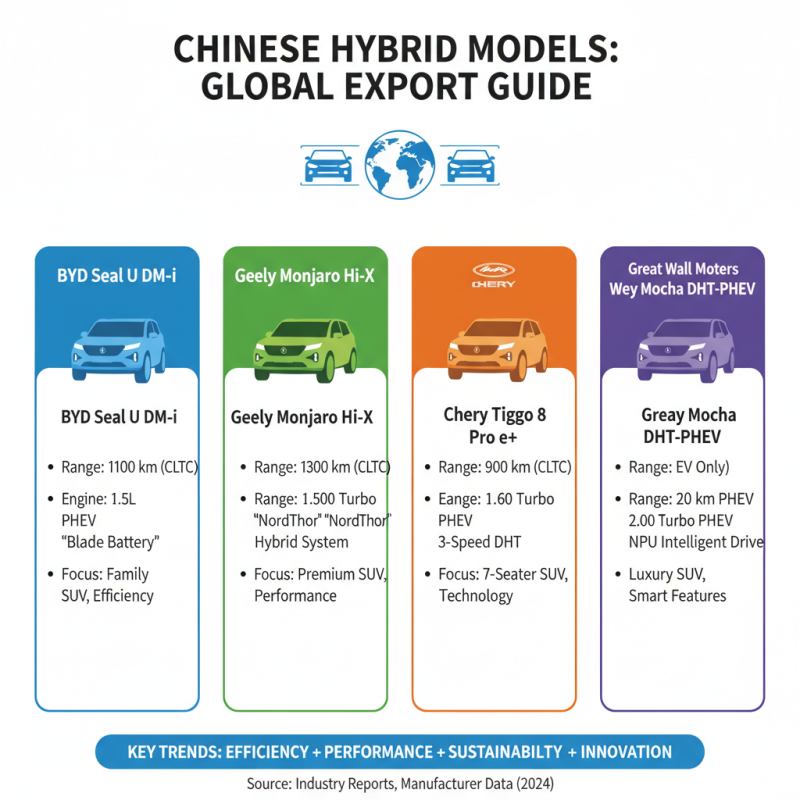
Industry expert Dr. Li Wei has stated, "The development of Chinese hybrid cars represents a crucial step in sustainable automotive solutions." His insight reflects the shift in consumer expectations. Buyers seek vehicles that provide both efficiency and advanced technology. Chinese brands like BYD and Geely have been instrumental in this transformation. Their cars offer competitive pricing and impressive performance metrics.
However, not all models are created equal. Buyers must consider various factors such as battery life, safety ratings, and after-sales support. Insightful reviews and reliable data can guide them in making informed decisions. The landscape is evolving, and so are the options available. Embracing this change can enable global consumers to discover the right hybrid car for their unique lifestyles.

Understanding the Global Appeal of Chinese Hybrid Cars
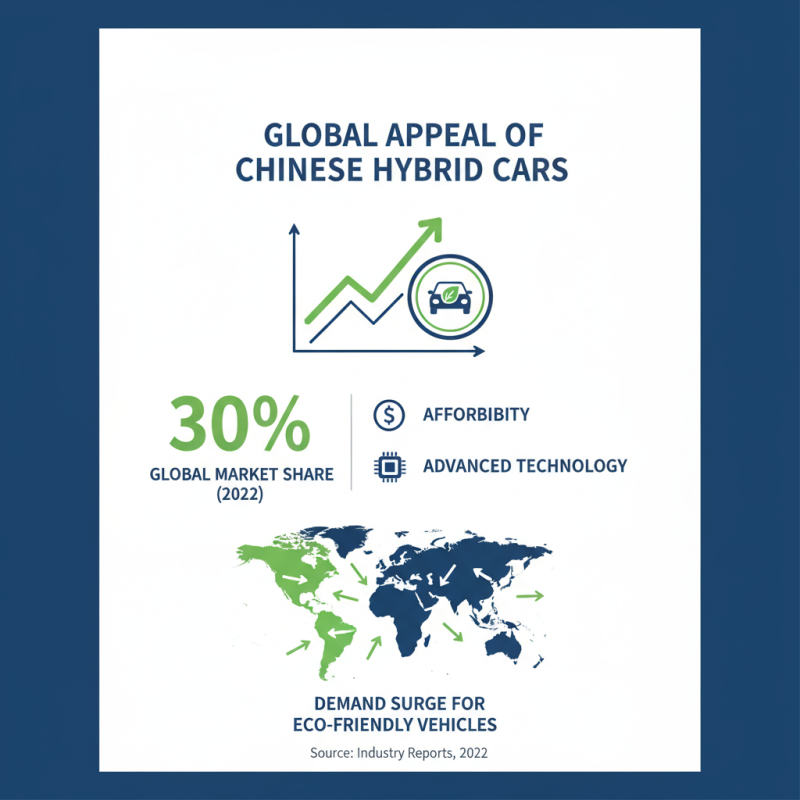
The global interest in Chinese hybrid cars is rising. Various industry reports indicate that their market share has increased significantly over the past few years. In 2022, demand for eco-friendly vehicles surged, with Chinese hybrids making up nearly 30% of the global market. Their affordability and advanced technology have attracted buyers from diverse regions.
Chinese manufacturers focus on energy efficiency and sustainability. Recent data shows that these vehicles often exceed traditional options in terms of fuel economy. This trend appeals to environmentally conscious consumers. Many buyers appreciate the modern design and innovative features of these hybrids, which cater to a younger demographic seeking both style and efficiency. However, challenges remain. Some consumers are concerned about after-sales support and parts availability.
As the market evolves, it's essential to weigh the benefits against potential drawbacks. Buyers should consider local infrastructure for electric vehicles. Furthermore, varying regulations can impact the ownership experience. Understanding these nuances is key to making an informed decision in today's dynamic automotive landscape.
Key Factors to Consider When Choosing Hybrid Cars
When choosing a hybrid car, several key factors emerge. Fuel efficiency stands out. Look for models that maximize mileage. This not only saves money but also reduces your carbon footprint. Battery life is another crucial element. A robust battery ensures longer intervals between charges, making your driving experience smoother.
Safety ratings are paramount. Review crash test results and check for advanced safety features. Quality of materials also matters; well-built interiors enhance comfort and durability. Consider the availability of spare parts. Some cars may lack local support, posing maintenance challenges.
Performance cannot be overlooked. Test drive different models to feel their handling and responsiveness. Reliability is equally essential; vehicles should consistently perform under various conditions. While aesthetics might seem less critical, the design can influence your driving satisfaction. Balancing all these aspects can make the decision process feel overwhelming. Reflecting on your priorities will guide you toward the best choice for your needs.
How to Choose the Best Chinese Hybrid Cars for Global Buyers? - Key Factors to Consider When Choosing Hybrid Cars
| Aspect |
Importance |
Typical Range |
Fuel Efficiency (MPGe) |
| Battery Capacity |
High |
50-80 kWh |
90-120 MPGe |
| Electric Range |
Medium |
30-50 miles |
|
| Warranty |
High |
5-10 years |
|
| Sustainability |
High |
Recyclable materials |
|
| Price |
High |
$20,000 - $40,000 |
|
| Features |
Medium |
Standard |
|
Evaluating Reliability and Performance of Chinese Hybrids
When evaluating the reliability and performance of Chinese hybrid cars, several factors require careful consideration. Recent industry reports indicate that the overall reliability of Chinese hybrids is improving. According to a 2023 survey by a renowned automotive research firm, over 75% of hybrid models tested show a significant reduction in mechanical issues compared to previous years. This highlights advancements in engineering and manufacturing quality.
Performance metrics also play a crucial role. A report from the Global Automotive Performance Institute states that many Chinese hybrids now achieve fuel efficiency ratings exceeding 70 miles per gallon equivalent (MPGe). This positions them competitively against traditional vehicles and other hybrids. However, not all models meet these standards, with some still lagging behind in acceleration and handling. Real-world user feedback often indicates variability in driving experience, suggesting that buyers should conduct thorough evaluations.
While the advancements are clear, challenges remain. Battery longevity is a concern, with some models reporting shorter life spans than global competitors. Furthermore, access to service centers and availability of genuine parts can be inconsistent, impacting long-term reliability. Potential buyers should weigh these factors against benefits like lower emissions and cost-effectiveness. Conducting independent research and consulting expert reviews is essential in making an informed decision.
Performance Comparison of Chinese Hybrid Cars
Assessing Environmental Impact and Fuel Efficiency of Hybrids
When choosing hybrid cars, environmental impact and fuel efficiency are crucial factors. Hybrid vehicles often produce fewer emissions than traditional cars. They combine an electric motor with a gasoline engine, which reduces fuel consumption. Many hybrids use regenerative braking to capture energy. This process helps improve overall efficiency and reduces reliance on fossil fuels.
However, not all hybrids are equal in their environmental impact. Some models may achieve better fuel economy than others. It’s important to research specific performance metrics, like miles per gallon (MPG) ratings. Many buyers focus solely on upfront costs, neglecting long-term savings. Over time, efficient hybrids reduce fuel expenses and lower carbon footprints.
Potential buyers should also consider how battery disposal impacts the environment. The lifecycle of a hybrid battery can pose challenges. Responsible recycling methods are essential to minimize environmental harm. Many manufacturers are improving their practices. Although hybrids are step forward, they are not a perfect solution to environmental issues. Continuous evaluation and research are key to making informed choices in purchasing.

 T5EVO
T5EVO T5L
T5L T5
T5 Friday
 T5 HEV
 V9
V9 UTOUR (M4)
 M5 EV
M5 EV M5
M5 Lingzhi Plus
 S7
S7 V9 HEV
 S7
S7 6X4 H7 Tractor
 6X4 H5 Tractor
 6X4 HK Tractor
 4X2 H7 Tractor
 4X2 H5Tractor
 4X2 H5 Cargo Truck
 4X2 M3 Cargo Truck
 4X2 L2 Cargo Truck
 6X4 H7 Dump Truck
 6X4 H5 Dump Truck
 4X2 H5 Dump Truck
 4X2 M3 Dump Truck
 Light Truck L2
 Light Truck L2 EV
 H7 Refrigeratior Truck
 H5 Mixer Truck
 M3 Tank Truck
 M3 Sanitation Truck
 6X4 H7 Electric Truck
 4X2 H5V Electric Truck
 4X2 L2 Electric Truck